


You’re standing in the store with a sorting toy in your hand. “12–18 months” it says on the box, and your child is a fresh 14 months old. That checks out exactly. Once you’re home, he looks at it for two minutes, sets it aside, and climbs frantically onto the couch instead. For the fifth time that afternoon. This guide to toys for 1-year-old development shows you what actually matters.
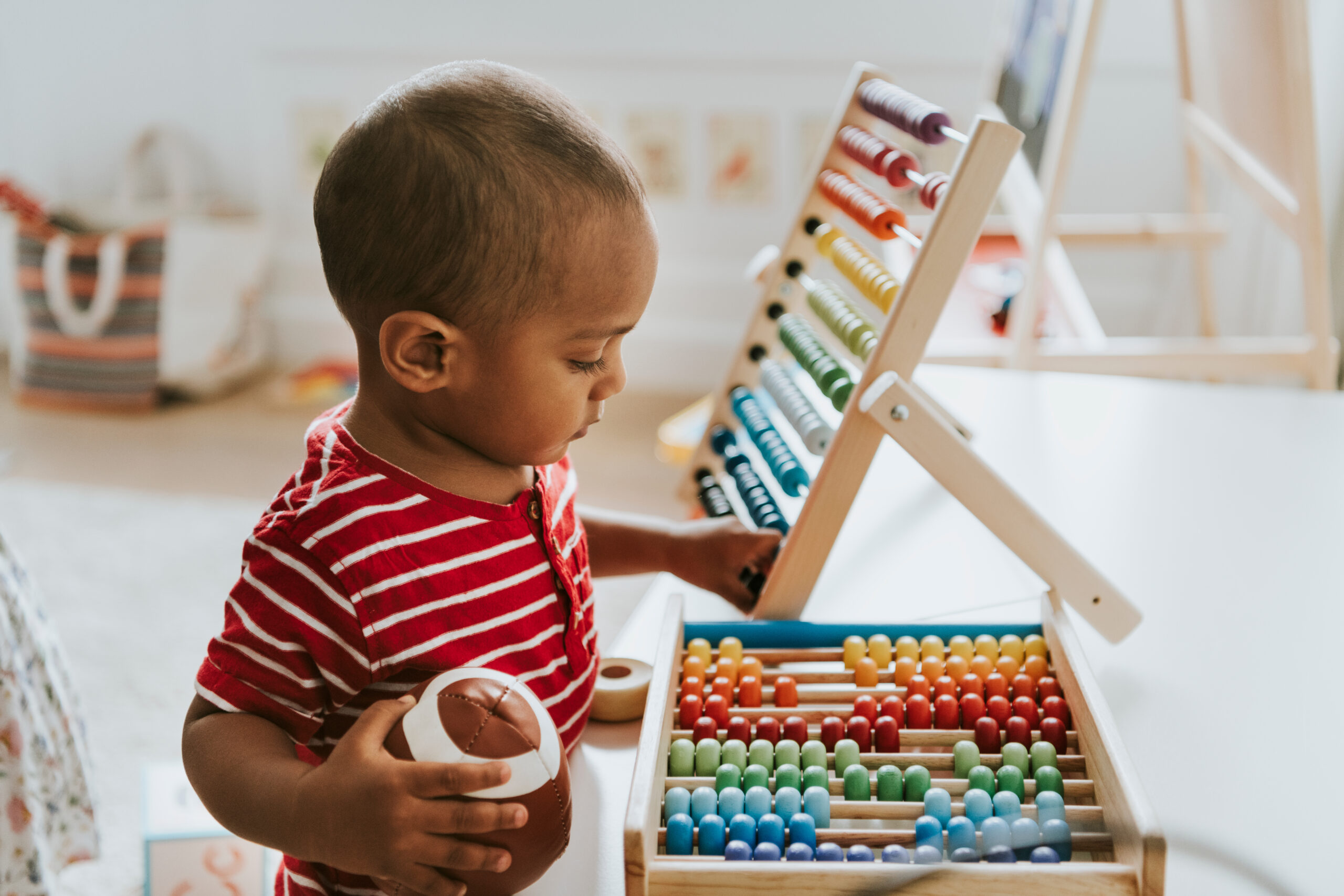
Why the Age on the Box Says Little About Your Child’s Development
Between age 1 and 2, you’ll find the biggest developmental spread of any stage in childhood. One 14-month-old is already walking confidently across the room; another is still pulling up on the couch. Both fall under “12–18 months.” According to research on toddler motor development, most children walk independently somewhere between 10 and 18 months, each at their own pace.
Manufacturers have to work with age ranges — that makes sense for a box on a store shelf. But it means “suitable for age 1” tells you almost nothing about what your child is actually working on this week. And that’s exactly where it goes wrong: you’re buying by calendar age, while your child moves through phases that last weeks, not months.
What to Look for in Toys for a 1-Year-Old
Instead of the age label, look at what your child is practicing right now. Around this age, there are a few clear signals to watch for:
- Pulling up and cruising — your child pulls up on furniture and walks along it. Push and pull toys fit this stage better than toys you sit and play with. They reward exactly the movement they’re practicing.
- Walking independently, still wobbly — bigger, stable things to climb on or step over work better than small building pieces.
- First words start coming — this is the moment for picture books with recognizable objects, where you name things together.
- Stacking and fitting things together — this usually comes after walking, not alongside it. A child who’s still deep in practicing walking often has little attention left for fine motor skills.
Three Types of Toys That Fit This Phase
No developmental hype here: this selection fits toys for 1-year-old development, exactly what your child is practicing these weeks.
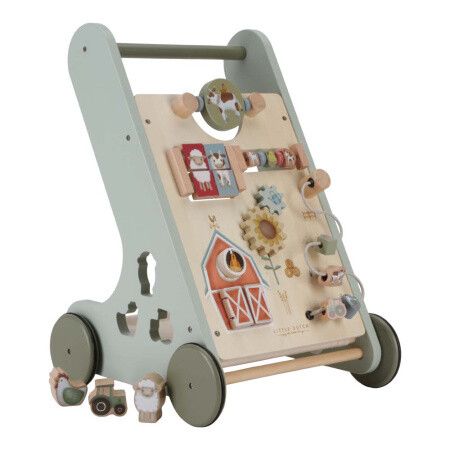
A push walker for the cruising stage, with activities on the front. From 12 months.

A walker and play station in one, for those first wobbly steps. From 12 months.

A cardboard picture book for naming words together. Suitable from age 1.
It’s not about the most expensive or “most developmental” toy. It’s about whether it fits what’s happening now, not what’s supposed to happen three months from now.
Borrow what fits this phase, and swap it out once your child is ready for something new.
The Problem Isn’t the Amount, It’s the Timing
Most parents don’t buy too little — they buy at the wrong moment. You come across cruising toys right around when your child is already running everywhere. Something for stacking sits in the closet while your child has long since moved on to building with something else.
It helps when toys can move with the phase your child is actually in — instead of having to guess three months ahead in the store and hope it lands right.
Look at This Week, Not at the Box
Before you buy something new: watch your child for five minutes and see what they do on their own. Are they climbing? Pointing at things and waiting for a word? Trying to fit one thing inside another? That tells you more than any age label.
The box guesses. You already know.
Toys That Grow With Your Child
No more guessing in the store. Borrow what fits this phase, swap as soon as your child is ready.
View subscriptions